
Sariska National Park
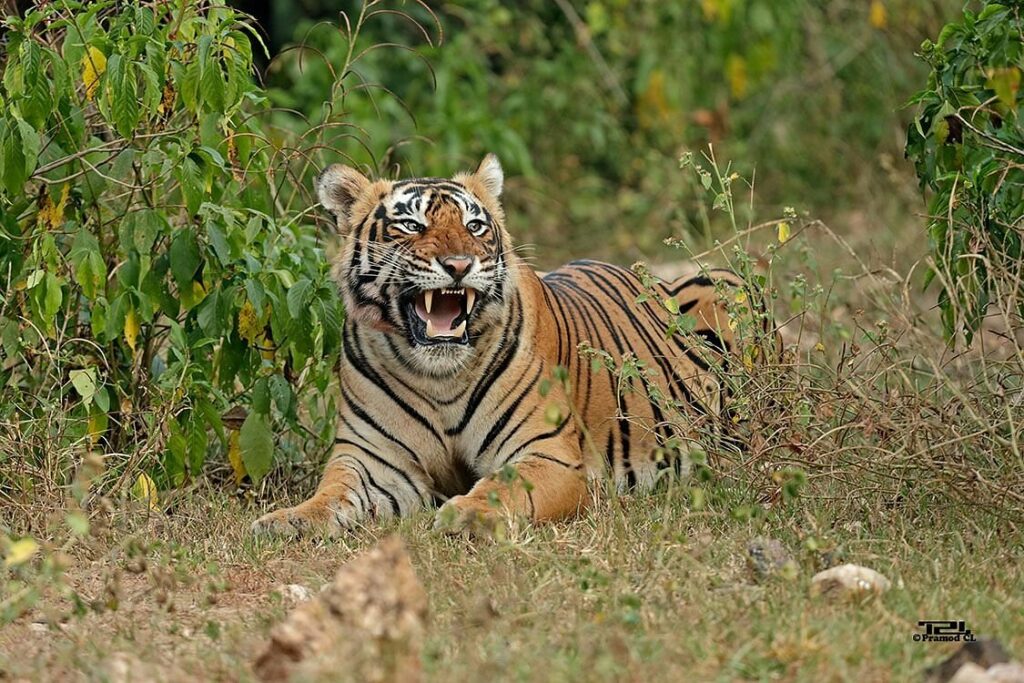
Sariska National Park, also known as Sariska Tiger Reserve, is located in the Alwar district of Rajasthan, India. Nestled amidst the rugged Aravalli Hills, the reserve lies between approximately 27°03′–27°42′ N latitude and 76°28′ E longitude.
The tiger reserve covers a total area of 1,203.33 sq. km, comprising:
- Core area: 881.11 sq. km
- Buffer area: 322.22 sq. km
Sariska is one of Rajasthan’s most important wildlife destinations and is renowned for its successful tiger reintroduction program, rich biodiversity, and historical significance.
Historical Background
The region around Sariska has deep roots in Indian mythology and history. Alwar is associated with the legendary story of Prahlad and Hiranyakashipu, and nearby Virat Nagar is believed to be the place where the Pandavas spent their final year of exile incognito, as described in the Mahabharata.
The area gained prominence under the rule of the Bargujar Kings, who were part of the powerful Gurjara-Pratihara Empire that dominated northern India during the early medieval period.
From Royal Hunting Ground to Tiger Reserve
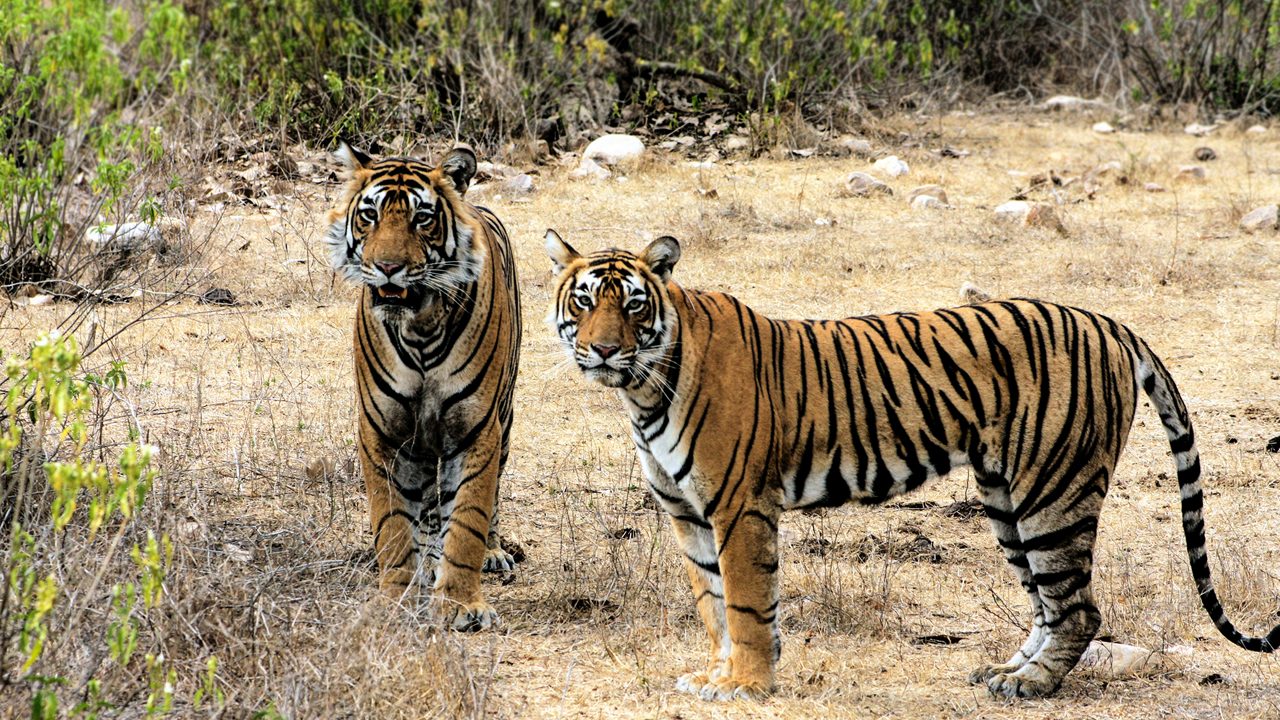
Before independence, Sariska served as the royal hunting ground of the princely state of Alwar. After India gained independence, the forests came under government control and received increasing levels of protection:
- 1955: Declared a Wildlife Reserve
- 1958: Notified as the Sariska Wildlife Sanctuary
- 1979: Included under Project Tiger and officially designated as Sariska Tiger Reserve
Climate and Landscape
Sariska remains dry for most of the year. During the monsoon, the landscape transforms dramatically as dense undergrowth and fresh vegetation cover the hills and valleys.
- Summer temperature: Up to 45°C
- Best time to visit: October to March
- Terrain: Dry deciduous forests, rocky hills, valleys, and scrublands
In peak summer, the forest takes on an ash-brown appearance, while the valleys retain patches of greenery.
Quick Facts About Sariska
| Year | Event |
|---|---|
| 1955 | Sariska forest first recognized as a Wildlife Reserve |
| 1958 | Declared a Wildlife Sanctuary |
| 1979 | Became India’s 11th Tiger Reserve under Project Tiger |
| 2004 | Tigers became extinct in Sariska due to poaching |
| 2008 | One tiger and one tigress relocated from Ranthambore (world’s first tiger relocation project) |
| 2012 | Tigress ST-2 gave birth to two cubs, marking the project’s success |
| 2013 | Alwar Forest Range added as buffer zone of Sariska Tiger Reserve |
The Tiger Relocation Project – A Global Success Story
Sariska lost all its tigers to poaching by 2005. In response, the National Tiger Conservation Authority (NTCA) and the Rajasthan Forest Department prepared a reintroduction plan between 2006 and 2007.
In 2008, three tigers (two females and one male) were airlifted from Ranthambore National Park to Sariska. Between 2008 and 2011, five more tigers were relocated.
The turning point came in 2012, when Tigress ST-2 gave birth to two cubs, proving that the relocated tigers had adapted successfully. Further cub births in subsequent years established a stable breeding population.
Today, Sariska supports a healthy tiger population and is regarded as the world’s first successful tiger relocation project.
Advanced Tiger Monitoring
Sariska has one of the most sophisticated tiger monitoring systems in India. The forest department uses:
- Thermal imaging cameras
- Drone surveillance
- GPS-based tracking
- Dedicated daytime monitoring teams
- Night patrol vehicles in tiger movement zones
Each tiger is closely monitored to ensure its safety and to prevent poaching.
Flora of Sariska
The vegetation of Sariska is primarily dry deciduous forest. The dominant tree species include:
- Dhok (Anogeissus pendula)
- Arjun
- Tendu
The scrublands are covered with hardy shrubs such as ber and khair, while grasses like Chrysopogon and Aristida provide important grazing grounds for herbivores.
This diverse vegetation forms the ecological foundation of the reserve and supports a wide range of wildlife species.
Fauna of Sariska
Sariska is home to an impressive variety of wildlife, including:
- Royal Bengal Tiger
- Leopard
- Sambar Deer
- Chital (Spotted Deer)
- Nilgai
- Wild Boar
- Hanuman Langur
- Rhesus Macaque
Birdwatchers can spot more than 200 species of birds, including peafowl, crested serpent eagles, and various migratory species. Reptiles such as monitor lizards and Indian pythons further enrich the park’s biodiversity.
How to Reach Sariska
| By Air | The nearest airport is Jaipur International Airport, located about 133 km from Sariska. Taxis and buses are available from Jaipur to the reserve. |
| By Train | The closest railway station is Alwar Junction, approximately 35 km away. Alwar has regular train connections with Delhi, Jaipur, Mumbai, and other major cities. |
| By Road | Sariska is well connected by road to major cities in Rajasthan and neighboring states. From Delhi: Take NH-48 (Delhi–Jaipur Highway), then continue via the Alwar–Bhiwadi Bypass Road. From Jaipur: Travel on NH-48 and then follow the Alwar–Jaipur Road. |