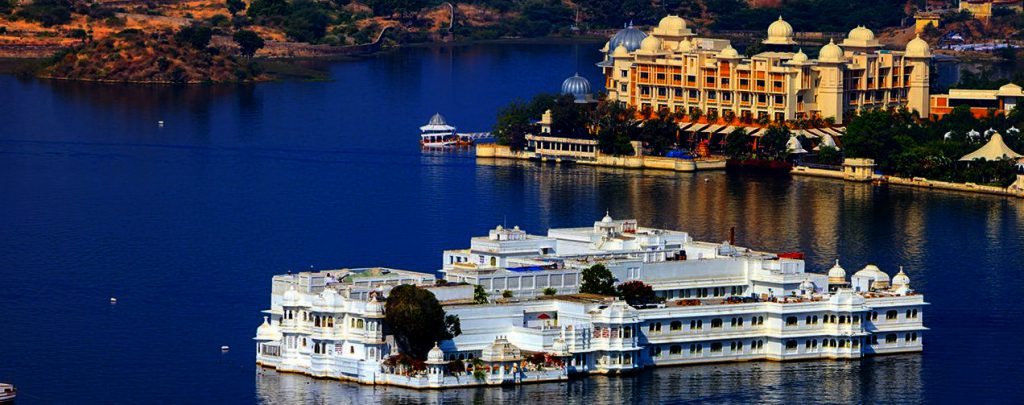
Udaipur, often referred to as the “Venice of the East,” is a captivating city in Rajasthan known for its picturesque lakes, grand palaces, and vibrant culture. Founded in 1568 by Maharana Udai Singh II, the city boasts architectural marvels like the City Palace complex, which offers panoramic views of Lake Pichola. Visitors can enjoy serene boat rides on the lake, explore the intricately designed Jag Mandir and Jagdish Temple, and stroll through the lush Saheliyon Ki Bari gardens. With its blend of natural beauty and royal heritage, Udaipur offers an unforgettable experience for every traveler.
History of Udaipur
Fairy –tale palace and gardens, temples and narrow lanes create a picture perfect atmosphere. The placid lake Pichhola mirrors a feeling of wonder and tranquillity. Yet, Udaipur was once – the epicentre of heroism, valour and chivalry.
Udaipur is the jewel of Mewar- a kingdom ruled by the Sisodia dynasty for 1200 years. Like other cities of Rajasthan, Udaipur also has its own legend. According to it Maharana Udai Singh, while on hunting met a holy man meditating on a hill overlooking the lake Pichhola. He advised the Maharana to build his palace on that spot, where a shimmering stream flowed through a fertile valley. A most picturesque indeed with a lake, an agreeable altitude nestled in an amphitheatre of low mountains. The Maharana Udai Singh II did as he was told and gave the world a city we know as Udaipur in 1568. After Chittorgarh was destroyed by the Mughal emperor Akbar.The Royal family is still influential and has been the driving force behind the rise of Udaipur as a tourist destination.
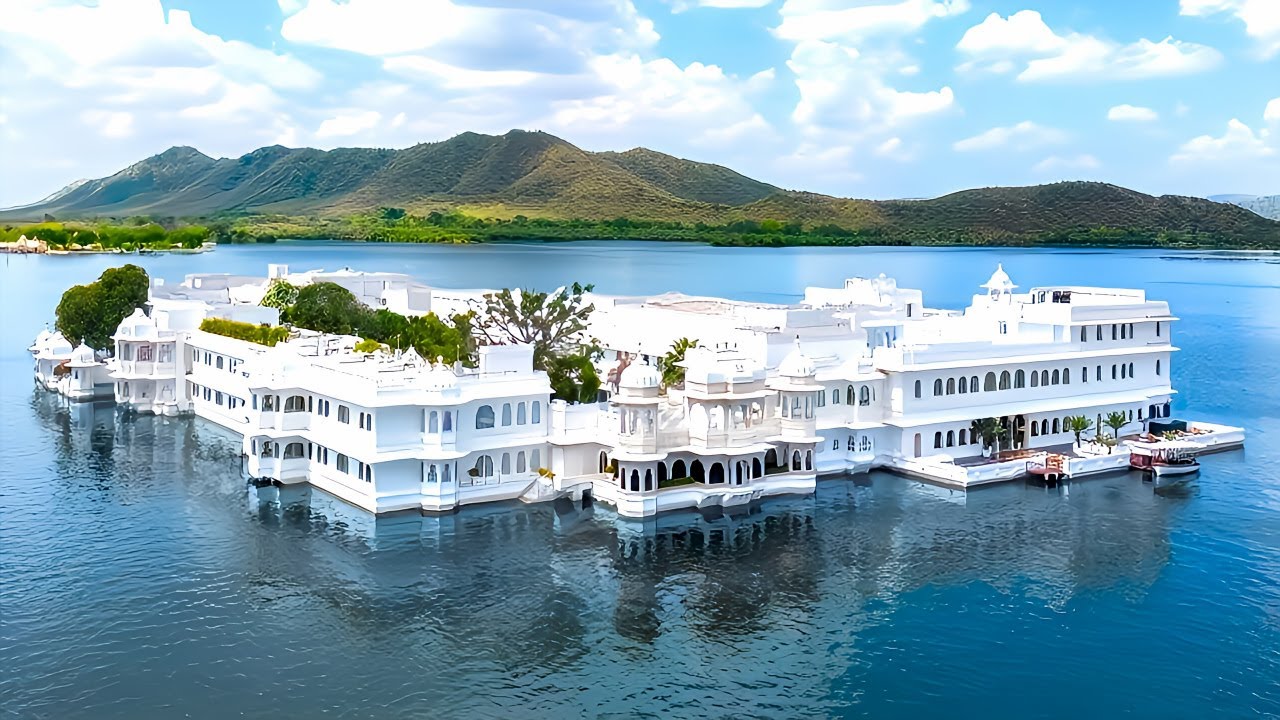
Udaipur is magical with its awe-inspiring palaces and monuments, matchless setting framed by Aravalli hills. The charm of boat rides on the lake, the buzz of its ancient bazaars, its lively arts scene, the quaint old-world feel of its better hotels, its endless tempting shops and some lovely countryside you will love to explore. Overlooking the aquamarine lake Pichhola stands a splendid City Palace- a marvel in granite and marble. Originally, there was eleven gates but now only five remain. The Suraj Pol or the Sun Gate on the eastern side is the main entrance to the city.Fantastical palaces, temples, havelis and countless narrow, crooked, colourful streets add to the city’s natural charms.
While in Udaipur, must visit other attractions in its vicinity are the formidable Chittaurgarh, The mountain fortress Kumbhalgarh, the beautiful Jain Temples of Ranakpur, Eklingji and Nathdwara. There is nothing more exhilarating than a quick gateway to cool climes of Mt Abu in the summer months. And, its only stone’s throw from this magnificent city of dreams.
Udaipur Sightseeing
City Palace: A majestic architectural marvel towering over the lake on a hill surrounded by crenelated walls. It is a conglomeration of courtyards, pavilions, terraces, corridors, rooms and hanging gardens. The main entrance is through the triple arched gate, the “Tripolia Gate” with eight marble porticos. The Maharanas were weighed were weighed under the gate in gold, the equivalent amount of which was distributed among the populace. The Suraj Gokhanda; the balcony of the sun, is where the Suryavansi Maharanas of mewar presented themselves to the people in times of trouble to restore their confidence. The “Mor Chowk” is known for its exquisite peacock mosaic in glass and the “Chini Chtrashala” noted for its blue and white ceramics are other attractions in the Palace.
Jadish temple: Built in 1661 A.D by Maharana Jagat Singh, this Indo-Aryan temple is the largest and the most beautiful temple of Udaipur with excellent sculpted images
Bhartiya Lok Kala Museum: the interesting collection exhibited by this Indian Folk arts museum includes dresses, ornaments, puppets, masks dolls, folk ornaments, puppets, masks, dolls, the fol musical instruments and paintings.
Saheliyo ki Bari:This small ornamental garden was a popular relaxing spot where royal ladies came stroll and hence the name. The garden has many fountains in its four delightful pools, chiselled kiosks and marble.
Pratap Memorial:Atop the Moti Magri or a pearl hill, overlooking the Fateh Sagar Lake is the memorial of the Rajput Hero. Maharana Pratap with bronze statue of the Maharana..
Fateh Sagar: A beautiful lake overlooked by a number of hills on the three sides and Pratap Memorial on the north was built by Maharana Fateh Singh. In the middle of the lakes is a lovely garden island with boat shaped café accessible by an enjoyable boat ride.
Pichhola Lake:The picturesque lake that entranced Maharana Udai Singh. It was later enlarged by the founder. The lake is surrounded by hills, temples, bathing ghats and embankment. Two island palaces, Jog Mandir and Jag niwas (Lake Palace) on the lake are of breath-taking magnificence.
Ahar: the ancient capital Sisodias, 3 km from Udaipur, Ahar boasts of profusion of Royal cenotaphs of rulers of Mewar. A rare collection of antiquities including earthen pots, iron objects and other art items excavated Former capital of the Kachchhwaha rulers of the old state of Dhundhar for seven centuries. Very little of early structures survive now.
Sajjan Garh: Dominating the city’s skyline is the monsoon Palace of Sajan Garh. It offers a panoramic overview of the city’s lakes palaces and the surrounding country side.
Gulab Bagh: A spectacular rose garden laid by Maharana Sajjan Singh. A library has rare collection of ancient handwritten manuscripts and books. Toy train and zoo are added attractions.