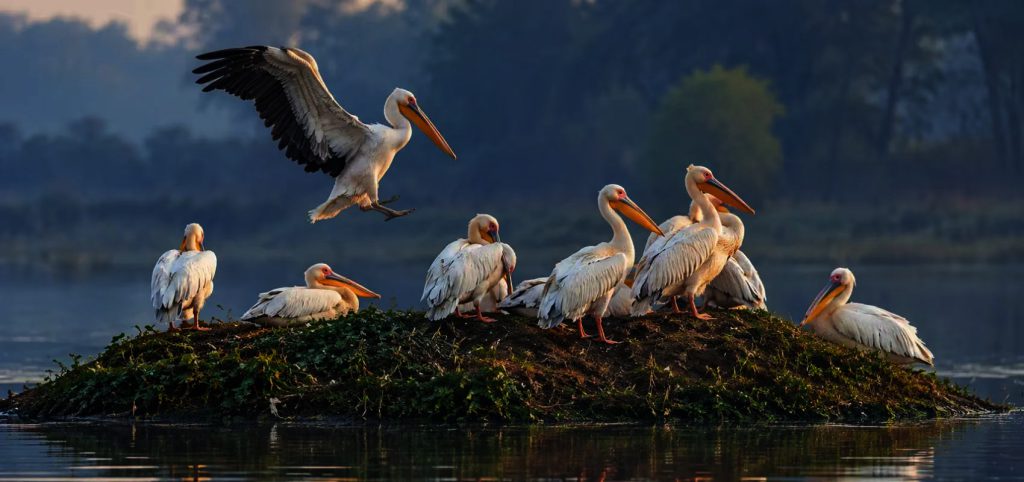
Nestled in Bharatpur, Rajasthan, Keoladeo National Park—also known as Bharatpur Bird Sanctuary—is a UNESCO World Heritage Site renowned for its rich avian diversity. Home to over 370 bird species, including the rare Siberian crane, the park’s wetlands and woodlands attract migratory and resident birds alike. A must-visit destination for birdwatchers and nature enthusiasts, offering serene landscapes and unparalleled birding experiences.
It is one of the finest Bird sanctuary in the world inundated with over 400 species of water birds. Bharatpur is the eastern gateway of Rajasthan lies at the end of 55 km drive from Agra
Birder’s Paradise –Keoladeo Ghana National Park
Bharatpur, brings you to the heart of bird land. A major destination for bird lovers from all over the world over with its Keoladeo Ghana National park; the finest in Asia. The Siberian crane takes its winter break by landing in the sylvan surroundings of Bharatpur every year. If a sense of history fascinates you, visit the Bharatpur palace and take in the remnants of the royal past, rich repository of ancient exhibits dating back to the early 15th century.

Keoladeo National Park: Once the royal hunting preserve of the princes of Bharatpur, it is one of the finest Bird sanctuary in the world inundated with over 400 species of water birds. Exotic migratory birds from Afghanistan, central Asia, Tibet as well as Siberian Cranes from the Artic, Greyleg geese from Siberia and barheaded geese from China, come here in July / Aug to spend the winters in the warmer climate and they breed till Oct /Nov.
Colonies of cormorants, spoonbills storks, egrets, herons can be spotted all over the park. The raised path shaded by babul trees make viewing easier. Migratory birds includes several species of Cranes, Pelicans, Geese, Ducks, Eagles, Hawks, Shanks, Stints, Wagtails, Warblers, Wheatears, Flycatchers, Buntings, Larks and Pipits, etc.
Bharatpur Bird sanctuary is open round the year. But best time to visit is from November to March
Useful Tips for Visitors
- Smoking is not allowed inside the park
- Nearest Railway Station is Bharatpur
- A good camera with telescopic view is must
- No plastics or non biodegradable items is to be left over
- Visit Early Morning or Late Afternoon for better experience
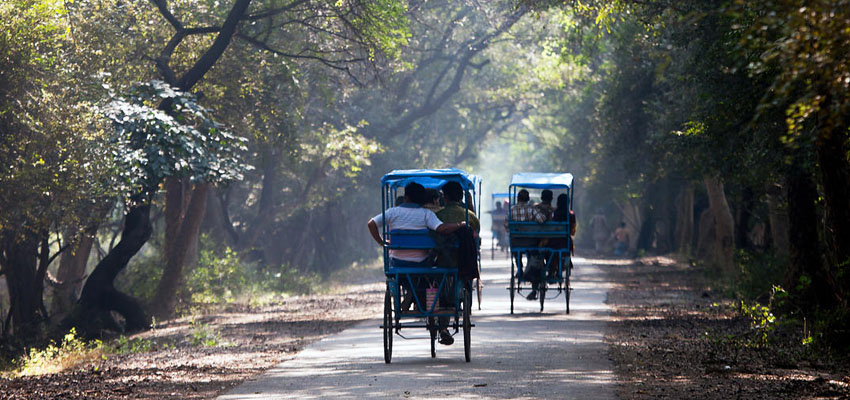
- A Cycle rickshaw is the best conveyance to visit the sanctuary.
Bharatpur Sightseeing–Places to Visit in Bharatpur
Lohagarh fort: the massive structure built in the early 18th century. With its impregnable defences it sustained itself even number of British attacks. The fort was conceived and designed by Maharaja Suraj Mal, the founder of Bharatpur. The fort has three palaces within its precinct’s Kishori Mahal, Mahal Khas and Kothi Khas.
The Palace:This royal edifice is a fusion of the Mughal and Rajput architecture styles with magnificent apartments and intricately designed floor tiles having interesting patters. One can marvel of the ancient exhibits displayed in the museum in the central part of the palace.
Government Museum:A rich collection of artefacts, exquisitely carved sculptures and ancient inscriptions can be admired in the Governmental Museum located in the palace. All these items speak volumes about the rich heritage, art and crafts of the region.
Jawahar Burj and Fateh Burj:A few of the eight imposing towers still stand erect within the glorious ramparts of the fort. Especially two of them. Jawahar Burj and Fateh Burj are of special interest. These were built by Maharaja Suraj Mal to commemorate his victories over the Mughals and the British respectively. The coronation ceremony of Jat rulers of Bharatpur was also held in Jawahar Burj.